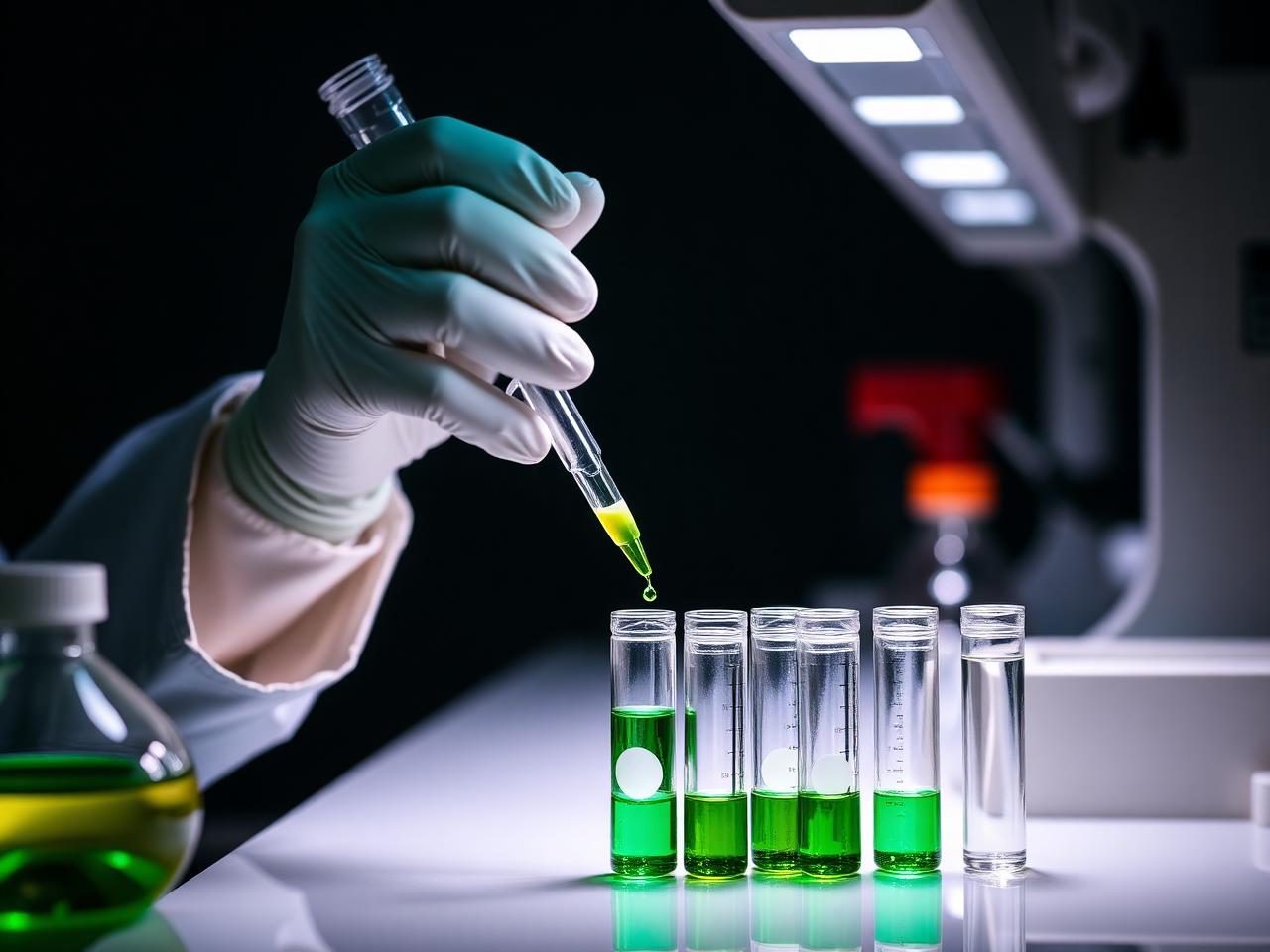
Biotechnology research laboratory
Research applications

Supporting Scientific Discovery Through Research-Grade Scorpion Venom

Scorpion venom is a complex biological mixture containing peptides, proteins, enzymes and small molecules — a rich source of research tools for the modern laboratory.

Research & Therapeutics

Dedicated research on scorpion venom and scorpion oil

Spanning peptide discovery and ion-channel pharmacology to anti-cancer, antimicrobial, and anti-angiogenesis studies that power new therapies.

7+
Years of Research
5
Species Studied
100+ assays
Annual Analytics

Key Peptides

  • OD1Nav1.7
  • ODK1α-KTx 8.5; Kv1.x
  • ODK2Kv1.3
  • Na+-channel toxin familyOD1-like
  • α-KTx family<10 kDa
Overview

A biological mixture that has become a scientific resource

Scorpion venom contains biologically active molecules that are widely studied across modern biomedical research. Its peptides are small, structurally stable and often highly selective for specific molecular targets — characteristics that have made venom one of the most productive natural sources of research tools available to laboratories today.

ScorpIranUSA operates as a supplier within this research ecosystem. We do not conduct clinical work and we make no therapeutic claims. Our role is to support qualified research organisations with responsibly produced material, prepared under controlled conditions and accompanied by documentation that allows scientific teams to record provenance accurately.

Because reproducibility depends on the input material as much as the method, we place particular emphasis on batch-to-batch consistency, transparent handling records and open technical communication with the laboratories we serve.


Precision laboratory sample preparation
Six research contexts

Where our materials are used

Each area below describes laboratory research only. No statement on this page should be read as a medical, diagnostic or therapeutic claim.

Drug Discovery

Venom peptides are investigated as valuable molecular tools in early pharmaceutical research. Their compact, disulphide-stabilised structures and selective binding behaviour make them useful probes for interrogating targets and informing the design of new chemical entities. We supply the raw research material that supports fractionation, screening and characterisation workflows in discovery laboratories.

Discuss drug discovery projects

Ion Channel Research

Components of scorpion venom are among the most widely studied natural modulators of voltage- and ligand-gated ion channels. Laboratories use them to examine channel gating, subtype selectivity and electrophysiological behaviour in physiology and pharmacology research programmes, where a consistent source material is essential to comparable results.

Discuss ion channel research projects

Neuroscience

In neuroscience laboratories, venom-derived molecules are applied in controlled studies exploring nerve signalling, synaptic transmission, receptor localisation and cellular response mechanisms. These are fundamental research contexts conducted under institutional oversight, not clinical applications.

Discuss neuroscience projects

Peptide Discovery

Interest in naturally occurring venom peptides continues to grow as sequencing, proteomics and structural biology methods improve. Research groups mine venom as a molecular library, isolating and characterising novel peptide scaffolds for further scientific investigation.

Discuss peptide discovery projects

Molecular Biology

Venom fractions are used in biochemical and molecular investigations including binding assays, enzymatic studies, protein interaction work and structural characterisation, supporting method development as well as primary research questions.

Discuss molecular biology projects

Biomedical Research

We support universities, research institutes and pharmaceutical laboratories conducting both basic and applied biomedical research, providing consistent material and the batch documentation that institutional record-keeping and publication standards require.

Discuss biomedical research projects
Focus Areas

Six therapeutic research programmes

Each programme combines fractionation, analytics, and biological assays to advance scorpion venom from raw material to validated research leads.

Oncology

Venom-derived peptides (e.g., Na+ channel modulators including OD1-like; α-KTx Kv blockers such as ODK1/ODK2; CRISP family; enzymatic components like hyaluronidase fragments) are being evaluated for anti-tumor mechanisms (apoptosis, invasion/migration, S-phase arrest, anti-angiogenesis) with orthogonal analytics (LC-MS(/MS), HPLC-PDA, Tricine SDS-PAGE, Raman).

OD1ODK1 (α-KTx 8.5)ODK2Na+-channel toxin familyCRISP

Models: in vitro / ex vivo / in vivo

Species link: A. crassicauda, O. doriae, M. eupeus

Pain & Ion Channels

Sodium (Nav) and potassium (Kv) channel modulators for neuropathic pain and neuropharmacology, with emphasis on low-molecular-weight neurotoxin-range peptides (≈3–13 kDa) evidenced by MALDI/LC-MS and Tricine SDS-PAGE, and fractionated by HPLC-PDA. Current work focuses on selectivity profiling and practical delivery strategies.

Nav (esp. Nav1.7)Kv1.2Kv1.3

Species link: O. doriae (HPLC: 86 peaks; SDS-PAGE: <10 kDa predominant)

Antimicrobial

Discovery and optimization of short, cationic peptide candidates (<10 kDa) enriched in our venom fractions (shown by Tricine SDS-PAGE and MALDI/LC-MS) against priority pathogens. Fractions are generated by HPLC-PDA and tracked with run metadata; activity is benchmarked with MIC and time-kill workflows, with biofilm assays where applicable.

AMP candidatesMIC (CLSI-style)time-killbiofilm

Species link: M. eupeus (SDS-PAGE: peptides predominantly <4 kDa; HPLC: multi-peak profile)

Anti-angiogenesis

Screening of low–molecular-weight venom peptide fractions (<10 kDa; OD1-like Na+-channel toxins and α-KTx Kv blockers) for anti-angiogenic effects in endothelial assays. Fractions are isolated by HPLC-PDA and tracked by Raman and LC-MS(/MS); pathway mapping and combination strategies are under evaluation.

OD1-like / α-KTx-enriched fractionsHUVEC tube formationCAM

Species link: H. saulcyi

Scorpion Oil

Preclinical evaluation and pharmacological profiling of scorpion oil for potential research applications. Current standardized material: GAZHDIN (50% olive oil [CAS 8001-25-0] + 50% scorpion oil), characterized as light-yellow, odorless, non-flammable (flash point 200 °C), vapor pressure <0.5 Pa @ 20 °C; store tightly closed below 24 °C; not classified as dangerous for air/land/sea transport (per MSDS).

GC-MS lipid/sterol panelRamanMSDSnon-flammable

Immunomodulation

Kv-targeting venom peptides are explored for T-cell modulation and autoimmune research. Emphasis on α-KTx short-chain blockers (<10 kDa) with activity on Kv1.3 (e.g., ODK2) and Kv1.2 (ODK1). Fractions are resolved by HPLC-PDA and characterized by MALDI/LC-MS; functional assays include patch-clamp, Ca2+ flux, and cytokine readouts.

Kv1.3Kv1.2ODK2ODK1

Species link: O. doriae

Methods & Analytics

Instrumentation and protocols that support reproducible data

Every batch is characterized with orthogonal techniques to ensure traceability and comparability across studies.

HPLC

Fractionation profiles recorded with PDA at 210/215 nm (Knauer Smartline). Column: C18, 4.6 × 250 mm, 5 µm, 100 Å. Gradient: A = water + 0.1% TFA, B = acetonitrile + 0.1% TFA; 0.5 mL/min; autosampler 30 µL (100 µL loop).

Deliverables: peak tables (RT/Area/Height), totals, PDA peak-purity, and column performance metrics.

SDS-PAGE

Tricine SDS-PAGE for venom proteins/peptides with predominant <10 kDa bands; typical ladder ticks include 116, 66.2, 45, 35, 25, 18.4, 14.4 kDa. Staining: Coomassie R-250.

Used for batch comparability and low-MW enrichment checks.

Raman

Spectral fingerprints for batch identity and component cues. Typical acquisitions: 785 nm and 532 nm (200–2000 cm−1); characteristic bands around ~515, ~645, ~1125, ~1458, and ~1576–1597 cm−1.

LC-MS(/MS)

Peptide and small-molecule identification with mass accuracy and sequence coverage. Used to confirm key toxins, track fraction composition, and support batch-to-batch comparability.

GC-MS

Compositional screens for scorpion oil (GAZHDIN) emphasizing fatty acids/esters/sterols such as oleic acid, ethyl oleate, ethyl palmitate, and cholesterol.

Bioassays

Functional readouts including patch-clamp, Ca2+ flux, cytokine panels, MIC/time-kill, HUVEC tube formation, and CAM assays — all conducted under institutional oversight for research use only.

Working with us

From first enquiry to ongoing collaboration

A predictable four-stage process keeps scientific, logistical and compliance considerations aligned from the outset.

01

Scientific enquiry

You describe the study, species interest, quantity and timeline. We confirm feasibility and legal permissibility for your jurisdiction.

02

Technical alignment

Our team discusses material form, documentation, storage requirements and delivery expectations with your laboratory.

03

Preparation & review

Material is prepared under written procedures and reviewed against internal criteria before release, with the batch record completed.

04

Dispatch & follow-up

Packaging is matched to route and destination. After receipt we remain available for technical follow-up throughout the study.

Scientific team collaborating on research data
Responsible supply

Research use only — clearly stated, consistently applied

Materials are supplied for laboratory research by qualified organisations only. We verify the nature of the requesting organisation, decline requests from private individuals, and supply only where doing so is legally permitted in both the origin and destination jurisdictions.

  • Institutional and commercial research organisations only
  • No sales to private individuals under any circumstances
  • Compliance with applicable export and import requirements
  • No diagnostic, therapeutic or clinical claims of any kind